

Diverse Natural Ecosystem and Cultural Experiences: Ba Vi’s Path to Sustainable Green Tourism
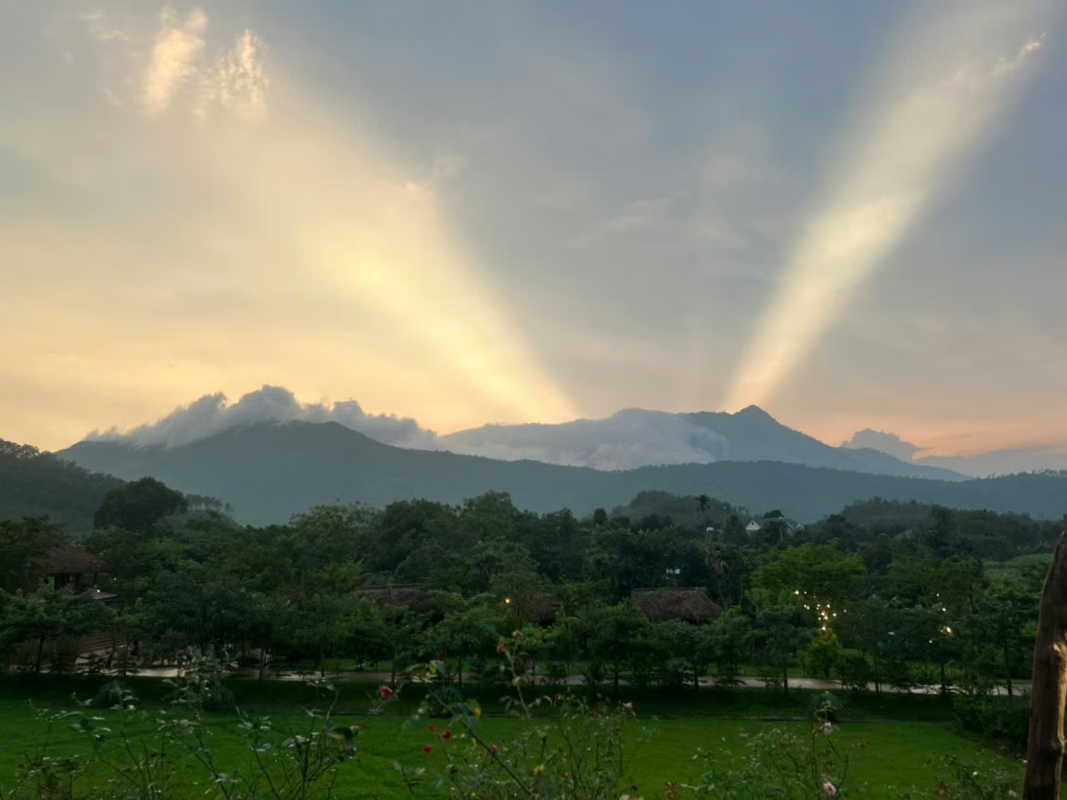
With its rich natural ecosystem of mountains, rivers, and serene landscapes, the semi-mountainous region of Ba Vi is an ideal destination for the development of sustainable green tourism, especially when paired with immersive local cultural experiences.

Ba Vi Tourism: A Rising Trend
In recent years, Ba Vi has drawn tourists through diverse offerings such as trekking, flower-viewing tours, wellness retreats, and resort getaways.
Hidden Heritage Within the Forest
In late May, the Hanoi Tourism Association’s Capital Tourism Club organized an exploratory tour along a new route in Ba Vi. The itinerary included a 3km trek along the Ngoc Hoa stream at 400m elevation, a visit to the ruins of an old French church at 800m elevation, and tours of local destinations like Ao Vua, Amour Resort, Ba Vi Resort, Doi Quan Boutique Mansion, as well as nature-based wellness services. The survey aimed to build a new tourism route in Hanoi’s outskirts in line with the city’s policy of developing sustainable green tourism.
Participants experienced one of Ba Vi’s most beautiful routes, with diverse flora and the meandering Ngoc Hoa stream flowing gently through the forest. French colonial ruins, now enveloped by vegetation, have become part of Ba Vi’s unique eco-tourism appeal.
Nguyen Kieu Oanh, Vice Chair and General Secretary of the Hanoi Tourism Association, highlighted Ba Vi’s distinctive assets for crafting new experiential tourism products. Ba Vi National Park, situated in a zone blending subtropical and temperate climates, features a rich forest ecosystem and is ideal for trekking, wellness retreats, camping, cloud hunting, and wildflower viewing.
Nguyen Tien Dat, Vice Chairman of the Capital Tourism Club and Director of AZA Travel, emphasized the value of Ba Vi’s French-era ruins, including moss-covered villas and the collapsed church, as untapped architectural heritage for tourism.
Ba Vi is also a land of spiritual significance, home to sacred sites like the Thuong Temple honoring Tan Vien Son Thanh—one of Vietnam’s Four Immortals—and the historic K9 site associated with President Ho Chi Minh. The region is also home to Dao and Muong ethnic communities, with rich traditions, handicrafts, and unique cuisine.
Accommodations and Wellness Tourism
Ba Vi also boasts a wide range of accommodations, from budget to luxury. Currently, it is a popular destination for wellness tourism, herbal baths, and relaxation at places like Melia Resort, Thien Son–Suoi Nga, Mat Retreat, and Tan Da Resort.
The Green Tourism Destination of the Capital
Despite its potential, Ba Vi tourism has yet to thrive as expected. Visitor numbers remain modest, and the district hasn’t seen a significant tourism breakthrough. Following Hanoi’s administrative reorganization, Ba Vi is now managed under 8 communes, posing new challenges for tourism planning and development in the city’s northwest.
Nguyen Manh Than, Chairman of the Hanoi Tourism Association and developer of several Ba Vi attractions like Ao Vua and Dam Long, noted that Ba Vi has immense potential but faces practical difficulties. Without strategic planning and increased investment in human and financial resources, Ba Vi’s tourism cannot progress.
Vu Van Tuyen, Vice President of the Community Tourism Association, pointed out the current lack of coordination among tourism stakeholders in Ba Vi, with destinations and operators often working independently.
Experts argue that while administrative structures may change, Ba Vi’s established attractions still hold appeal. Pham Hai Quynh, Director of the Asia Tourism Development Institute, emphasized focusing on green, eco-tourism integrated with local culture. “Ba Vi’s diverse ethnic communities, especially the unique cultures of the Muong and Dao, create exceptional appeal. The area can develop eco-tourism alongside Muong cuisine and Dao herbal wellness traditions,” he said.
Agreeing with this, Nguyen Tien Dat of the Capital Tourism Club stressed the need to define green, nature-based tourism as Ba Vi’s core offering and gradually enhance services toward wellness and luxury retreats.
According to Hanoi’s Department of Tourism, the city aims to promote smart, green, and sustainable tourism. Deputy Director Tran Trung Hieu stated that the strategy focuses on preserving cultural heritage and community engagement. Ba Vi is seen as Hanoi’s “green lung” and a key destination for nature-based tourism. Moving forward, the Department will collaborate with local authorities to boost promotion, conduct surveys, and develop distinct green tourism and cultural experiences to help suburban Hanoi tourism stand out.


